



Event

Here you will find all audio and video content on the topic. Click the button to access our written articles and more extensive publications.

articles and publications
Description

For whom is Thessaloniki today? Could it become in the future a city that offers quality of life, employment opportunities, and prospects for personal development? How do different communities coexist? What does the degradation of public, especially green, spaces signify? These pressing questions were the focus of an open discussion about the city’s needs, the changes it requires, the challenges it currently faces, and the priorities it must set for the future to reverse the trend of people leaving or the underutilization of its potential.


Participants in the discussion: Sofia Christoforidou, journalist at “Makedonia” and “Inside Story” - Evi Athanassiou, professor at the School of Architecture, Aristotle University of Thessaloniki - Vasiliki Kartsiakli, tour guide and co-founder of the cultural company dot2dot - Victor Benouzilio, actor - Narration by: Sofia Nikolaidou, author - Moderation: Michalis Goudis, director of the Thessaloniki Office of the Heinrich Böll Foundation


Olympion, Pavlos Zannas Hall, Sunday, February 18, 2024
Organized by: Heinrich Böll Foundation, Thessaloniki Office

The discussion is part of the conference titled “Where is this city going?” (organized by Parallaxi).

The video is available in Greek.


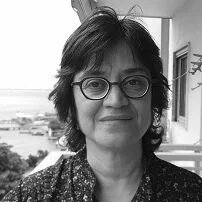
Evi Athanassiou

Εύη Αθανασίου

Title of Contribution: Thessaloniki ad hoc

Key Points: New processes of urban space production, absence of an overall vision and metropolitan-level strategy, green spaces as infrastructure for climate change adaptation, need for information and resident participation.

* Evangelia Athanasiou is an architect-engineer (AUTH) and a professor in the School of Architecture at AUTH. She completed postgraduate studies at the University of York (MA) and the University of Edinburgh (PhD), where she specialized in the environmental sustainability of cities. She has taught at the Hellenic Open University, at the Department of Architecture, University of Thessaly and at the Department of Spatial Planning and Development, AUTH. Since 2009, she has been teaching urban planning and design with a focus on the environmental dimensions of planning at AUTH. Her publications in international and Greek scientific journals and conferences center around a critical approach to the concept of urban sustainability, the relationship between the city and nature, and contemporary urban transformations with an emphasis on public space.


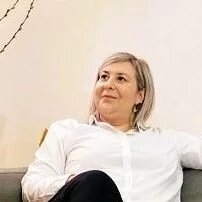
Sofia Christoforidou

Σοφία Χριστοφορίδου

Title of Contribution: Thessaloniki and us: Public spaces, individualism & claims

Key Points: Individualism, lack of participation and care for public spaces in the city, intense localism which does not lead to paths of assertion, the identity of Thessalonians.

* Sofia Christoforidou was born in Kavala and lives in Thessaloniki. She studied European Civilization at the Hellenic Open University and Journalism and New Media at the Aristotle University of Thessaloniki. She worked for seven years in local media in Kavala. Since 2007, she has been writing for the Thessaloniki-based newspaper “Makedonia”, and since 2016, she has also been publishing investigative reports on Inside Story. She has collaborated with TV100 and ERT3, the Thessaloniki Film Festival, and the National Theatre of Northern Greece (NTNG), and hosted shows on the online radio station amagi, etc. Her texts have been published in Greek and international magazines.


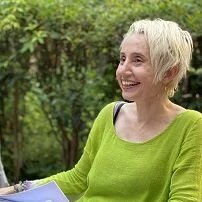
Vasiliki Kartsiakli

Βασιλική Καρτσιακλή

Title of Contribution: Memory and History: Foundations for the development of a city

Key Points: Crucial issues in the management of memory, cultural heritage, tourism, and sustainable development.

* Vasiliki Kartsiakli, born in Trikala, moved to Thessaloniki in 2001 to study History and Archaeology at the Aristotle University of Thessaloniki. She continued with postgraduate studies in Byzantine Archaeology and Art, while also completing studies in Byzantine Greek Paleography and the Conservation and Restoration of Works of Art. Before co-founding dot2dot, she worked as an archaeologist for the Ministry of Culture, the Teloglion Fine Arts Foundation, and collaborated with AUTH’s Research Committee on various projects. Certified as a tour guide (AUTH) since 2013, she has been part of the founding team of dot2dot since November of the same year. Since then, she has served as the lead scientist for the research, design, and implementation of thematic and immersive tours, as well as educational programs. Finally, responding to the company’s expanding activities, she has also been certified as an adult educator (National Organization for the Certification of Qualification & Vocational Guidance) and has specialized in drafting and managing European project proposals.


Victor Benouzilio

Βίκτωρ Μπενουζίλιο

Title of Contribution: Departure as a prerequisite for creation

Key Points: Factors driving young people to leave the city, lack of opportunities and infrastructure in the artistic sector, difficulties in the everyday life of a young person.

* Victor Benouzilio is a graduate of the Artistic School of Ampelokipi-Menemeni and the Drama School of the National Theatre of Northern Greece (NTNG). He is an actor, DJ, and waiter.


Sofia Nikolaidou

Σοφία Νικολαΐδου

Narration title: Saloniki_Salounga_Solun_SKG. My city, Thessaloniki

* Sofia Nikolaidou has published short story collections, novels, essays, and translations. Her novel Tonight We Have No Friends (Metaixmio, 2010) won the Athens Prize for Literature and was translated into Hebrew (Kester Books) and Romanian (Editura Omonia). Her novel Elephants Are Dancing (Metaixmio, 2012) was released in the U.S. and the English-speaking world (The Scapegoat, Melville House) in 2015. Her book All Good Today: The Chronicle of Cancer in My Breast (Metaixmio, 2015) received the Greek State Literary Award for promoting dialogue on sensitive social issues and was also translated into Romanian (Editura Omonia). Her theatrical play For Greece: The Polk Case on Stage was performed at the National Theatre of Northern Greece in the 2018–2019 season. Her most recent novel is Vor. Beyond the Law (Metaixmio, 2021). She teaches Creative Writing at the School of Journalism and Mass Communications at the Aristotle University of Thessaloniki, and at the Postgraduate Program “Creative Writing” of the Hellenic Open University.

Description


Ways ahead – How to counter right-wing populism and safeguard Human Rights and the Rule of Law in Europe

How can refugees and migrants themselves and civil society in general actively counter the shift to the right? In how far can journalism and media play a role to change the mainstream narratives and stereotypical perceptions? What are legal ways to challenge breaches of Rule of Law and what is the potential of strategic litigation? How can municipalities and the local level despite national and EU level policies support and welcome people on the move?


Milena Zajovic, psychologist, journalist, human rights defender: “After we connected actors on the ground [through ‘Are you Syrious?’ platform], we created through BVMN an advocacy platform that really tried to bring information from the ground to policy makers, to shortcut the entire big NGO monopoly. […]  I think our goal needs to be to become redundant because we need to constantly reinvent what we are doing and to do it from the scratch, in order to stay relevant”.


Tiago da Cruz Bartholo, coordinator of From the Sea to the City: “From the Sea to the City is aiming at turning a transnational local authority network into a political actor. For example, we have managed to take 10 municipalities last year to Brussels. And they were heard. It didn’t have the outcome of them being incorporated as an EU body to have direct exchange for policymaking, which is ideally what we would aim for, but it was for sure a valid step which we will continue to work on”.


Stefanos Loukopoulos, co-founder and director of Vouliwatch: “Firstly, we decided to be pop, […] we are trying to wrap something that might be a bit ugly and boring with colorful thing to make it more attractive. […] Secondly, we are trying to find clever ways to connect abstract terms that we are advocating for to practical issues. Thirdly, fighting – by fighting you set an example that you can stand up to seemingly authorities, entities and institutions that are bigger than you”.


Parasto Hakim, founder of SRAK Underground Schools: “I’m working on secret schools in Afghanistan from 2021 in September, shortly after the Taliban came. We have more than a thousand girls right now on our platforms that they are studying with us in secret schools and we have made some small businesses for them, so that they can support themselves and their families to escape being forced for marriages”.

Description


Democracy under pressure – Rule of Law challenged and Europe’s shift to the right

How have the discourse and actual policies regarding migration shifted in the last years in Europe? In how far is this part of an overall shift to the right? What role do fake news and disinformation, especially since the pandemic and the war against Ukraine play a role? How can the latest EU election results be interpreted and dealt with?


Petra Molnar, lawyer and anthropologist: “I’ve spent the last six years or so trying to understand how migration is changing through the use of new technologies – that includes surveillance, different types of algorithms, visa triaging and anything in between that is impacting the way that people on the move are experiencing their journeys and how power also operates in society. […] There are people who are at the center of this technological experimentation, which is unregulated, high-risk and harmful”.


Jon Henley, Guardian’s Europe correspondent: “The absolute core ideology that ultimately defines all of Europe’s far-right parties is nativism – the belief that the native group (whatever that may be) should be the exclusive inhabitants of the native state and then anybody who comes from outside the native group, any nonnative elements, represent some kind of threat. And that obviously explains why immigration is their huge battle cry and always has been and always will be”.


Pegah Edalatian, deputy chairwoman of Alliance 90/The Greens: “In Germany we got in a lot of refugees and there was so much solidarity and sympathy and they turned it around… You know there were some real problems but the far-right and the conservatives constantly focused on chaos, on fear, and they repeated that and repeated that until the whole society’s attitude turned around towards it. So that’s also important, how right-wing people play with the emotions of people”.


Laurent Standaert, director of the Green European Foundation: “[The new European Parliament] is not a far-right European Parliament, but when you have Ursula von der Leyen coming on the stage after and saying ‘The center holds’ […] it is obviously completely fallacious. No, the center doesn’t hold, it has entirely shifted to the right. The decline of the progressives is now confirmed in ways that are more structural than even in the past and that’s the scary part”.

Description

The complex topic of migration and asylum was examined at the international conference "Shipwrecked. Rethinking migration and asylum in Europe", organised on 24-25 June 2024 in Thessaloniki, Greece by the Heinrich Böll Foundation. Over 130 experts from all over the world – activists, lawyers, journalists, academics, politicians, members of civil society organisations – spent two days discussing and analysing the current situation and the perspectives that lie ahead. They took part in a busy programme of workshops, open conference and networking meetings exploring different aspects of the issue, from the criminalisation of people on the move to border violence and from the LGBTQI+ asylum seekers to the role of local government. In a Europe shaken by the rise of the far right and adopting ever stricter pacts on migration and asylum, what can the resilience of the Rule of Law be? The programme of the congress was accompanied by events such as the photo exhibition "1000 dreams: stories from the LGBTQ+ refugee experience", and the open-air concert with singer Vasso Vassiliadou and her musicians, which turned into a big folk party with the participation of people from the neighbourhood.

Description

In the winter of 2023-2024, there were large demonstrations by thousands of farmers in various European countries. After weeks of protests, many citizens still had questions: Where does this anger come from? What are the demands of the farmers? Are they the same in France, Greece, or Germany? What solutions can be brought at the local and European levels?

Although farmers and agricultural workers have grievances regarding bureaucracy, free trade agreements, and environmental regulations, the current crisis seems to have deeper roots. What are they, and what is the future for farmers and agricultural workers in Europe? How can we overcome this crisis to ensure that everyone can earn a fair living from their work?

For a better understanding of the European aspect of this agricultural crisis, we invite you to follow the discussion co-organised by Heinrich Boell Foundation, Thessaloniki Office in collaboration with the Heinrich Boell Foundation Office in Paris, on Monday the 12th of February 2024, to discuss this topic among French, German, and Greek farmers and researchers.

Thank you again to the following speakers:

Aurélie Catallo - Director of Agriculture France at IDDRI
Gesine Langlotz - Spokesperson of AbL - German Association for Small Farmers
Mathieu Courgeau - Farmer, President of Collectif Nourrir
Panayiotis Kalfountzos - President of the Farmers' Cooperative of Thessaly – ThesGi

Read a relevant article summarising the key-points of the discussion here: https://gr.boell.org/en/2024/02/16/agricultural-crisis-causes-and-possi…

Description

Our partner organization Border Violence Monitoring Network recently hosted a webinar titled 'Understanding the Pact: How the EU is Abolishing the Right to Asylum', which we were happy to support. In light of the complexity and intransparency of the reform process, this webinar not only provided much needed elaborations on the proposed changes to the Common European Asylum System, but also the potential implications these would have in different EU Member States. Given the pressure under which the current trilogue negotiations are held, in order to reach an agreement between the co-legislators, namely the Commission, the Council, and the Parliament, before Christmas, this webinar is a timely intervention to unpack the migration pact. Thanks to great speakers from Refugee Support Aegean, Association for Juridical Studies on Immigration (ASGI), the University of Keele and the Helsinki Foundation for Human Rights, who all are very experienced with regard to their respective context the webinar sheds light on the pact and its main regulations (Screening, Asylum Procedures, and the topic of ‘instrumentalisation’) and how their implementation would look like, given the realities in Greece, Italy, Turkey and Poland. Watch the webinar recording with links to the audio of live translations into Arabic, Turkish and BCS. Additionally, the Border Violence Monitoring Network published a short summary of the discussions in Arabic, Bulgarian, BCS , Farsi, French, Greek, Polish, Spanish and Turkish, on their website, here.

Description

For a large part of Europe, 2022 was the warmest year on record since 1950, according to the European State of the Climate report. Not only were there more days with ‘very strong heat stress’ but also seasonal anomalies in temperatures were noted that resulted in hazardous conditions for peoples’ health. Mediterranean cities are confronted with a number of challenges when it comes to ensuring conditions for sustainable living to their citizens as the impact of the climate crisis is becoming more and more apparent and extreme.

On 29 June 2023, the Heinrich Böll Foundation offices in Thessaloniki and Paris organised a very interesting online discussion titled ‘Decoding urban resilience in the Med’. Τhe invited experts discussed critical data on the status of climate in the Europe and foreseen trends and presented examples from Mediterranean cities on local adaptation and climate resilience strategies from Greece, France and Italy.

Speakers: Claudia di Napoli from Forecast Department of the European Centre for Medium-Range Weather Forecasts, Elisavet Bargianni, Chief Heat Officer in the City of Athens, Marco Falconi from the Italian Institute for Environmental Protection and Research, and Félix Blanc, Project Manager at the Ecological Transition Department in the City of Marseille. Moderation: Kira Taylor, Energy and Environment reporter, EURACTIV


Language: English

Europe Calling “Elections in Greece – What’s at stake for Greece and Europe?” - Europe Calling

video-thumbnail Watch on YouTube
Description

This is the recording of the 152nd episode of Europe Calling on 15 May 2023, an online event by Europe Calling & Heinrich Böll Foundation.

The event attempted to answer question such as; What is at stake at these elections? What are the big topics? How are the austerity measures enforced in the aftermath of the financial crisis affecting Greece today? What role do climate and environmental issues play in the campaigns?

Speakers:

Ιoli Christopoulou, Partner & Policy Director, The Green Tank, Greece

Michalis Goudis, Director, Heinrich Böll Stiftung, Thessaloniki Office – Greece

Eurydice Bersi, Journalist, Reporters United / Investigate Europe

Elias Papatheodorou, Member of the Coordinating Committee of the ‘Green and Purple‘ Alliance

Moderation: Dr. Maximilian Fries (Managing Director of Europe Calling)

More information here: https://europe-calling.de/en/webinar/...


The video is licensed under a Creative Commons Attribution-Non Commercial-Share Alike 4.0 International (CC BY-NC-SA 4.0): https://creativecommons.org/licenses/by-nc-sa/4.0/

PERSPECTIVE TO STAY - Panel 6 - People on the move conference - Heinrich-Böll-Stiftung Sarajevo

video-thumbnail Watch on YouTube
Description

People on the Move: (Still) stuck in the corridors to the EU “Status quo and Perspectives”

Sarajevo, Bosnia and Herzegovina, 31 March and 1 April 2022
Organised by the Heinrich Böll Foundation offices Sarajevo and Thessaloniki


Panel session #6

Perspective to stay - ways forward

  • Radoš Đurović, APC, Serbia
  • Emir Prcanović, Vaša Prava, Bosnia and Herzegovina
  • Antonia Pindulić, legal expert and activist, Centre for Peace Studies, Croatia
  • Andrea Kontenta, Italy

Moderator: Karolina Augustova


HBS offices Sarajevo and Thessaloniki brought together experts, grassroots activists, academia, practitioner and policy-maker from the region, the so called Balkan route as well as from the EU level, to have an in-depth look at the current status-quo of migration policies in Bosnia and Herzegovina, the Balkans and the EU, taking the latest developments in Ukraine into consideration. Over two days conference covered different aspects and challenges such as: - shrinking space/criminalization of people on the move and those showing solidarity with them, - media coverage of migration, mainstream narratives and hate speech, - "border management", the securitization of borders, - pushbacks and deportations, - asylum politics and alternative perspectives to stay.