SCREENING
With two special screenings in Berlin, one of them held at the German Federal Parliament (Bundestag) itself, the documentary “Tell Me / Πες μου” by Nikos Megrelis and Renee Revah brought issues related to Holocaust remembrance, the history of Thessaloniki’s Jewish community, and intergenerational trauma into public discussion. At the same time, it highlighted memory not only as an act of resistance against forgetting, but also as a means of understanding contemporary social and political challenges.

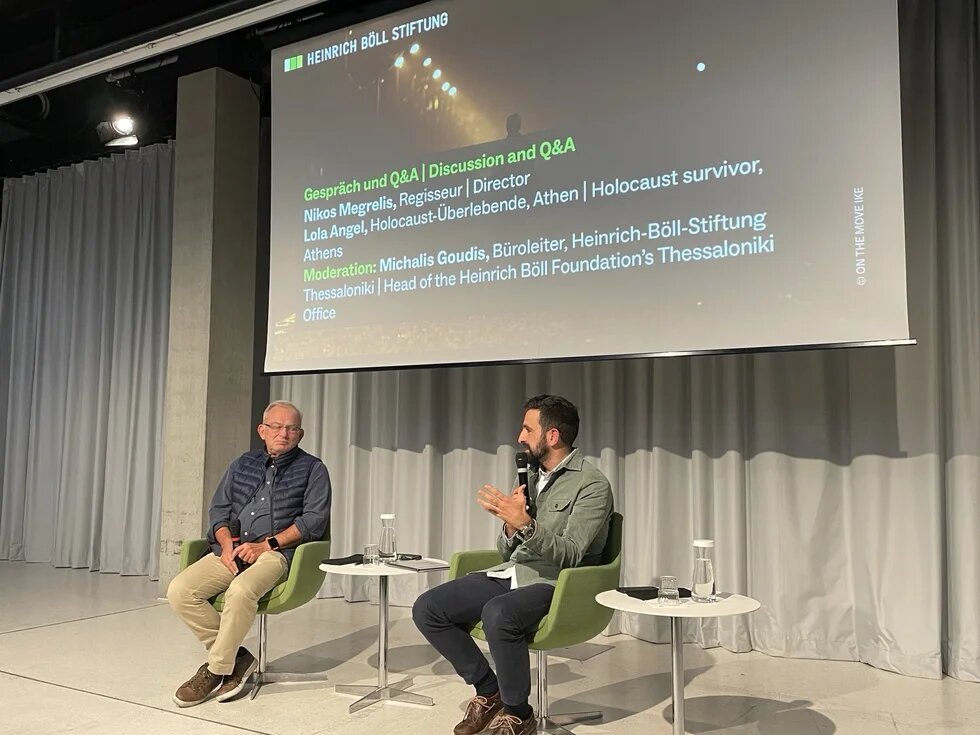
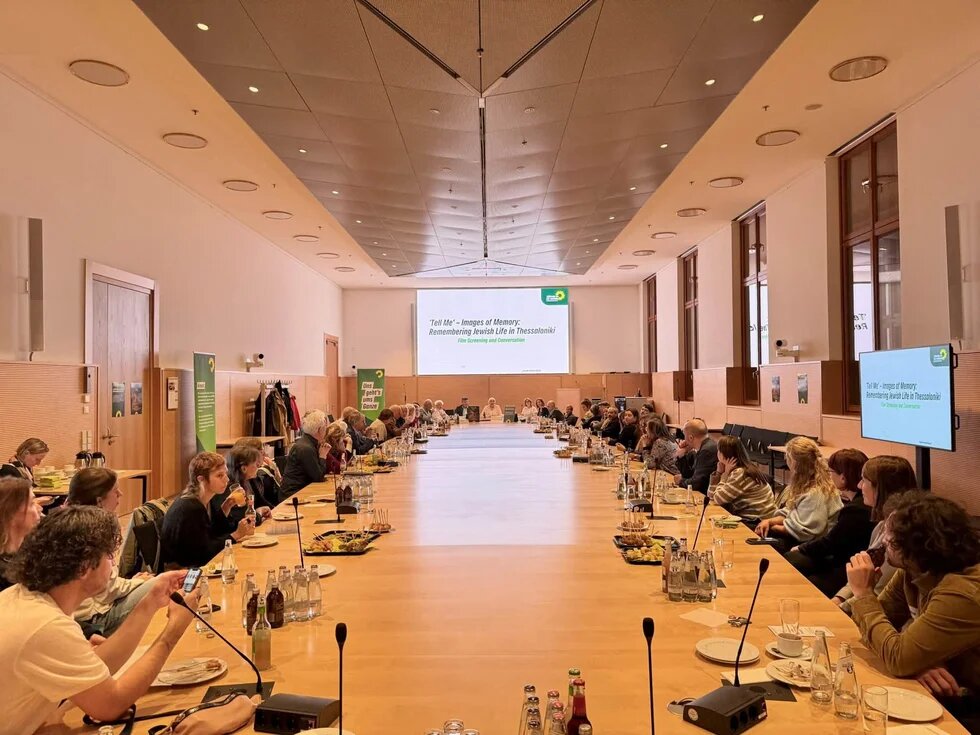
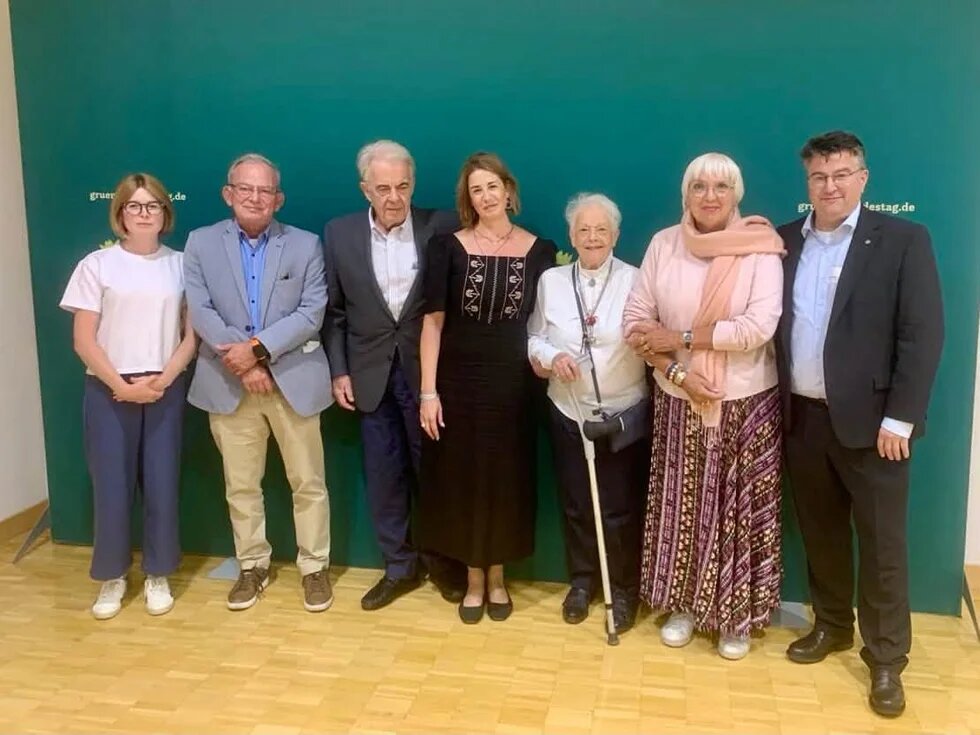
The first screening took place on 21 September 2026 at the Bundestag, at the initiative of the Green parliamentary group and under the patronage of Member of Parliament Claudia Roth. A second screening followed on 23 September 2026 at the Berlin headquarters of the Heinrich Böll Foundation. Both screenings were followed by discussions featuring director Nikos Megrelis, photographer and co-screenwriter Renee Revah, and Holocaust survivor Lola Angel. The event at the German Parliament also included Green MPs Boris Mijatović and Marlene Schönberger.
The screenings highlighted how historical memory remains closely connected to critical political and social questions facing contemporary Europe: How do we remember? What responsibility do societies bear toward the past? And how is memory transmitted as the last Holocaust survivors gradually pass away?
From the personal to the collective
At the heart of the documentary lies the personal journey of Renee Revah, a Greek photographer and visual artist, who confronts the trauma left by the extermination of her Jewish grandfather’s family in Nazi concentration camps.
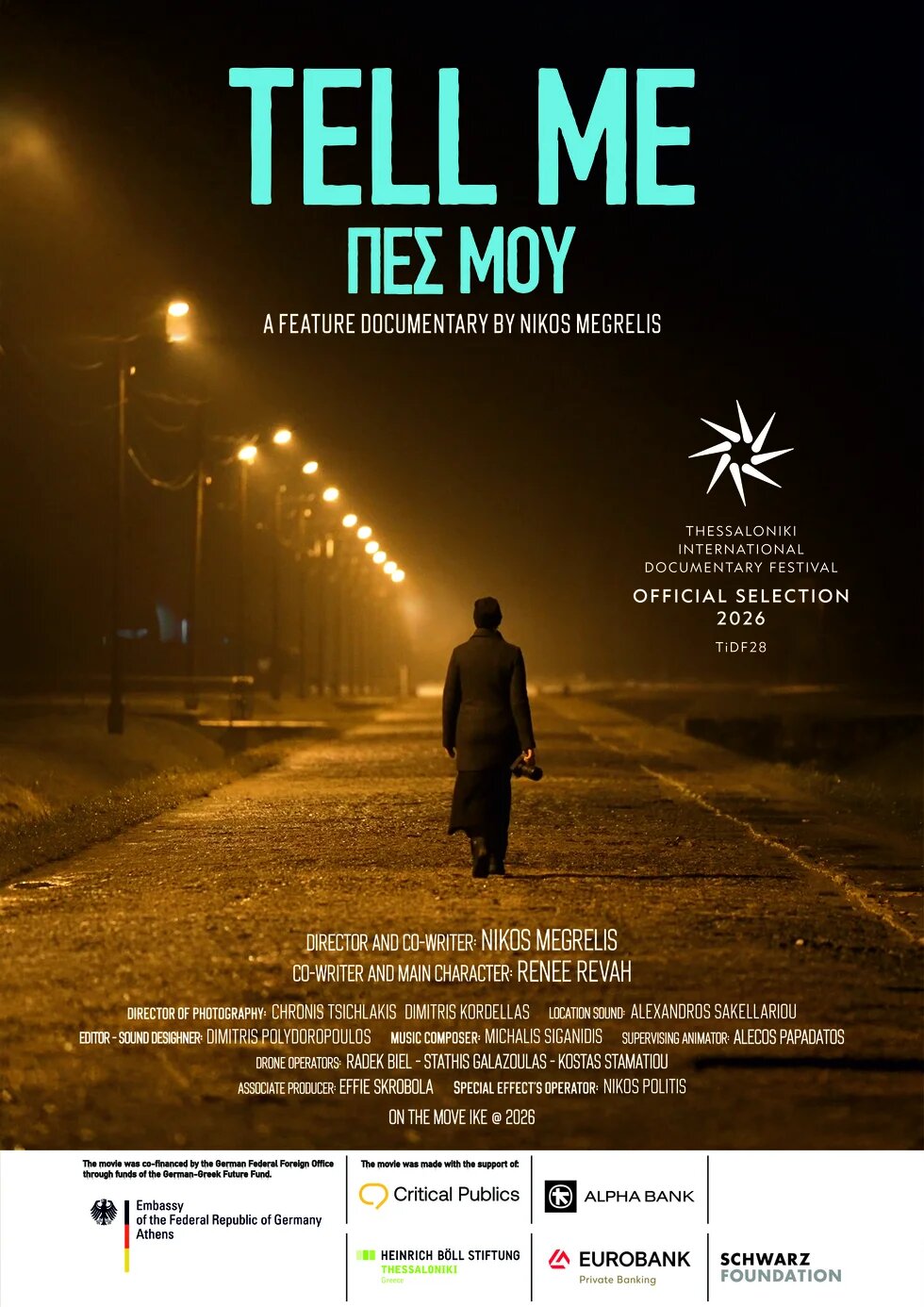
The film follows Revah on a quest to recover her family’s memory, exploring the consequences of the Holocaust not only for those who directly experienced it, but also for subsequent generations through what is known as intergenerational trauma, a concept that has become a significant field of academic inquiry in recent decades. Through a symbolic and imagined dialogue with her grandfather, the sole survivor of his family, the documentary examines the silent transmission of memory, loss, and grief from one generation to the next.
This story is inseparable from the history of the Jewish community of Thessaloniki, one of Europe’s most important Jewish communities before the Second World War. Its near-total destruction in Nazi concentration camps constitutes one of the most tragic chapters of European history, yet for decades remained relatively unknown outside Greece.
Directed by Nikos Megrelis, “Tell Me” seeks not only to document the past, but also to explore the ways in which the past continues to shape the present. Memory emerges as both an act of resistance against oblivion and a tool for understanding contemporary social and political challenges.
A screening of special symbolic significance
The screening at the German Federal Parliament carried particular symbolic weight. As the Green parliamentary group noted in its invitation, the aim was to use the film as a starting point for discussion on Jewish history in Greece, the culture of remembrance, and Germany’s responsibility to preserve the historical memory of the Holocaust.
Questions raised during the evening addressed the visibility of Greek Jewish history, how to confront the gaps and silences that still surround it, and the role that Europe and foreign cultural and educational policy can play in passing memory on to future generations.
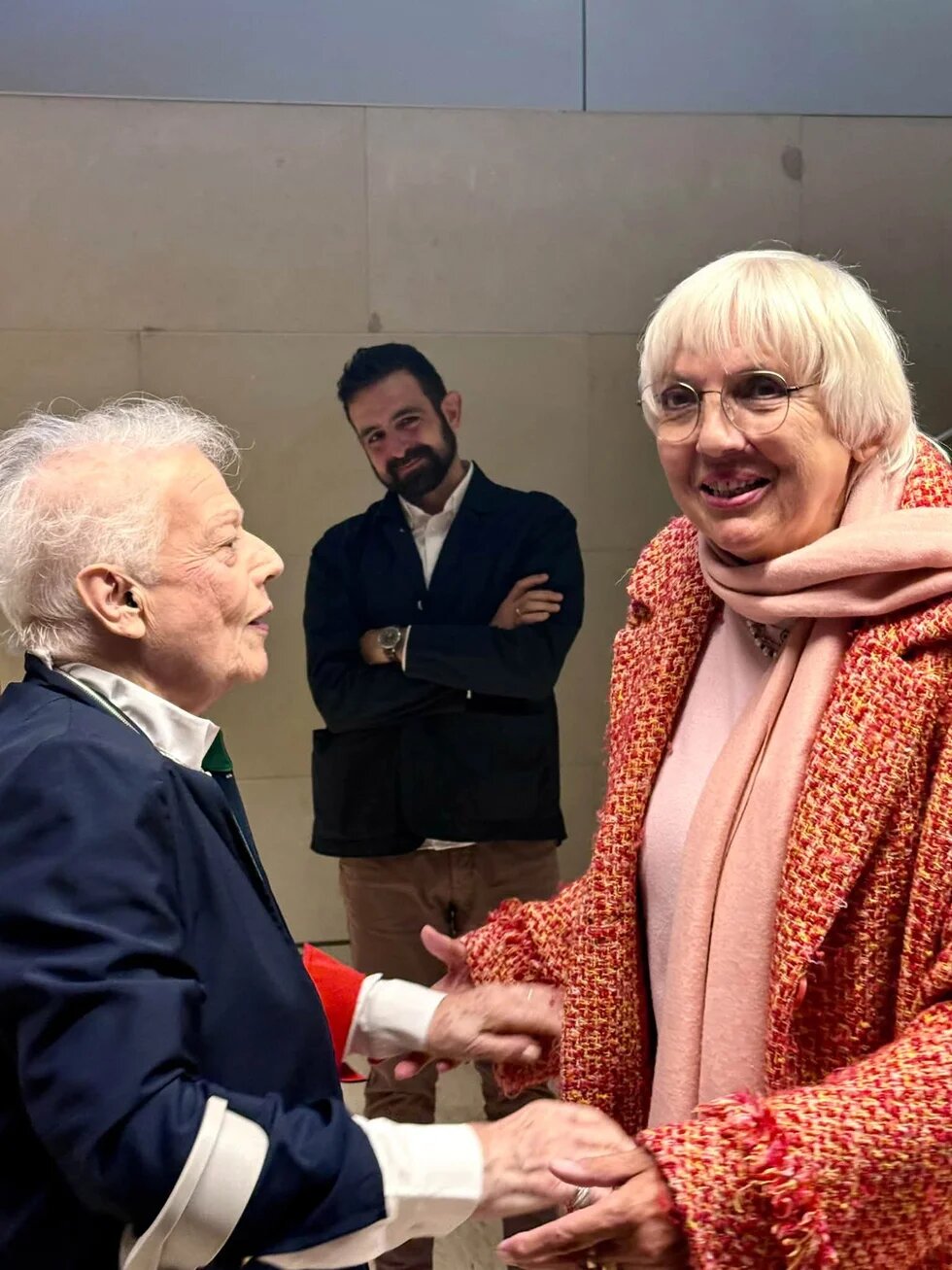
According to reports by the Athens-Macedonian News Agency (ANA-MPA), former German Minister of State for Culture and Green MP Claudia Roth stressed that the event was organised around the question of how memory can be preserved and transmitted at a time when Holocaust survivors are becoming fewer and fewer.
As she noted, Renee Revah’s search for her family history demonstrates how profoundly the Holocaust can continue to affect people who did not experience it firsthand. Roth emphasized that remembrance culture cannot be reduced to a ritualized process; rather, it is a political responsibility requiring constant vigilance against antisemitism, exclusion, and authoritarianism.
The German politician further underlined that remembering Auschwitz is not only about honoring the victims, but also about safeguarding democracy, human dignity, and fundamental freedoms in the present.
In the same spirit, Green MP Boris Mijatović noted that the film gives a face and a voice to individuals who are often lost behind the statistics of history. He referred specifically to Thessaloniki’s significance for European Jewish history and the deep wounds left by German crimes during the Second World War.
MP Marlene Schönberger observed that Revah’s personal story makes the history of Thessaloniki’s entire Jewish community more tangible and accessible. The film, she argued, enables audiences to form an emotional connection with experiences and memories that might otherwise remain distant.
Memory as a warning for the present
Particularly moving were the remarks of Renee Revah, who described it as difficult to put into words her feelings while watching such a personal story be screened in the German Parliament. She noted that the presence of Lola Angel and her father, Isidoros Revah, made the evening even more emotional. Renee Revah explained that the film began as an attempt to understand the traces left by the Holocaust within her own family, but gradually evolved into a broader exploration. As she put it, trauma does not remain confined to the moment of violence; it continues to be transmitted within families through silence, fear, and what remains unspoken.
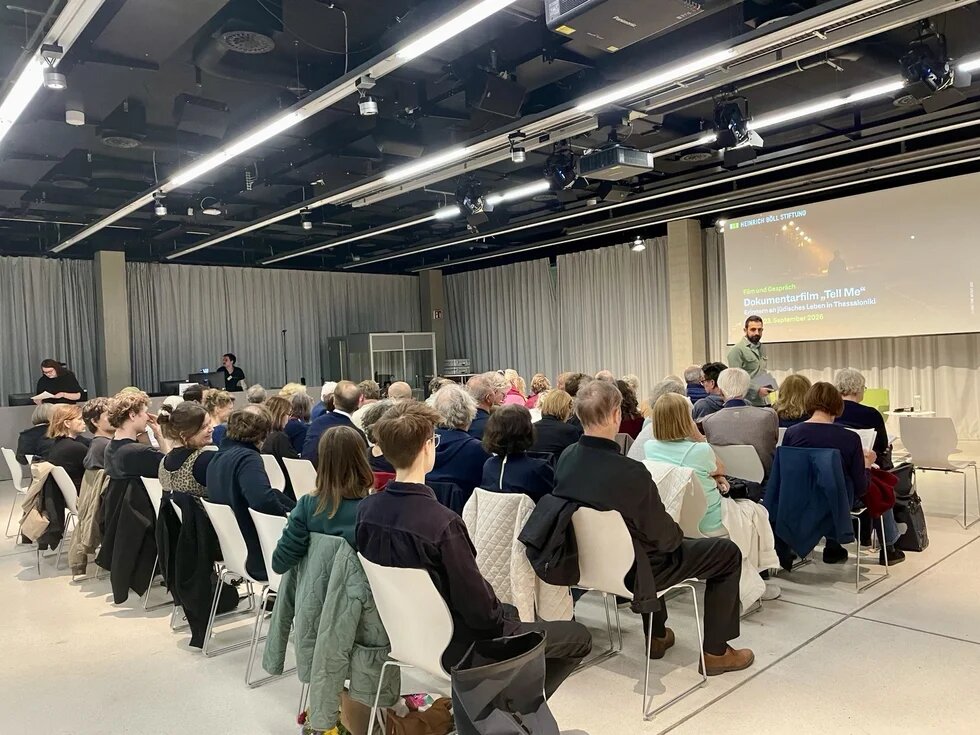
Director Nikos Megrelis explained to ANA-MPA that he and Renee Revah consciously chose not to use the familiar images of the liberation of the concentration camps. Instead, they focused their gaze on the present. The camera follows Revah through sites of memory, from Thessaloniki’s Old Railway Station to Auschwitz, capturing these landscapes as they exist today. According to the director, the image functions not only as a record of the present but also as a mechanism for recovering memory and, at the same time, as a warning for the future.
Megrelis also connected the historical example of the Holocaust to the contemporary rise of authoritarian and far-right forces across Europe. The Holocaust, he argued, did not emerge suddenly; rather, it resulted from a gradual process of constructing “enemies” and undermining democratic institutions. For this reason, memory concerns not only the past but also societies’ ability to recognise the dangers of the present before it is too late.
The presence of “Tell Me” in Berlin marks an important milestone for a film that began as a deeply personal search and evolved into a broader project of public remembrance.
The Thessaloniki office of the Heinrich Böll Foundation, which supported the production of the documentary, considers this initiative part of its ongoing commitment to strengthening historical memory, bringing lesser-known or marginalised stories to light, and promoting public dialogue about the past and its contemporary implications.