REVIEW
The 9th Congress of Young Europeans – a biennial event organized by the Heinrich Böll Foundation, the Green European Foundation and the Young European Greens – was held from 9 to 12 October 2025 in Albania, hosted by Heinrich Böll Foundation - Tirana Office. Themed “The Ends of Europe”, the Congress invited 80 young Europeans from across the continent to think critically about Europe’s purpose, direction, and future transformation, both as a political project and as a lived, contested reality.
This is a review of the Congress through the eyes of Giorgos Mylonas, a young journalist from Greece who attended the four‑day event as a delegate.

What are the ends of Europe? In times of war, climate crisis, refugee crisis, migration, authoritarian drift, economic crisis, social inequalities and struggling cultural identities, Europeans and young people in particular strive to have a peaceful, economically prosperous and ecologically sustainable life not only for themselves but also for future generations to come. Taking this into account, we as participants shared thoughts and ideas in an open and inclusive environment and held discussions with influential figures in politics, civil society and culture.
There were five thematic areas: First, there were geopolitical ends (borders, migration flows and freedom of movement). Second, there were moral and political ends ranging from the undermining of European values to anti-gender movements. Third, there were the backsliding of democratic institutions, war and the climate crisis. Furthermore, there were cultural and identity ends comprising all religious, national, race and gender characteristics and lastly there were the transformative ends, the imagination of post-national reality, the growing of solidarity movements, the preservation of the environment and the strengthening of democratic values and practices.
A pioneer of the Green movement
On the first day of the Congress, we toured a photo exhibition on the Albanian 90s and the political events that shaped the hopes and aspirations of the Albanian people for a fairer society. At night we watched a film named “Petra Kelly - ACT NOW”. Petra Kelly was an environmentalist, peace activist, feminist and founding member of the German Green Party, Bündnis 90/Die Grünen. Rare archival footage was presented and also comments from her then colleagues and fellow activists. After the film we discussed the extent to which human rights violations, the climate crisis, wars and social injustice are worth fighting against in this day and age and what are the pros and cons of working within the institutions versus outside them.
The political aspects of biodiversity loss and the climate crisis
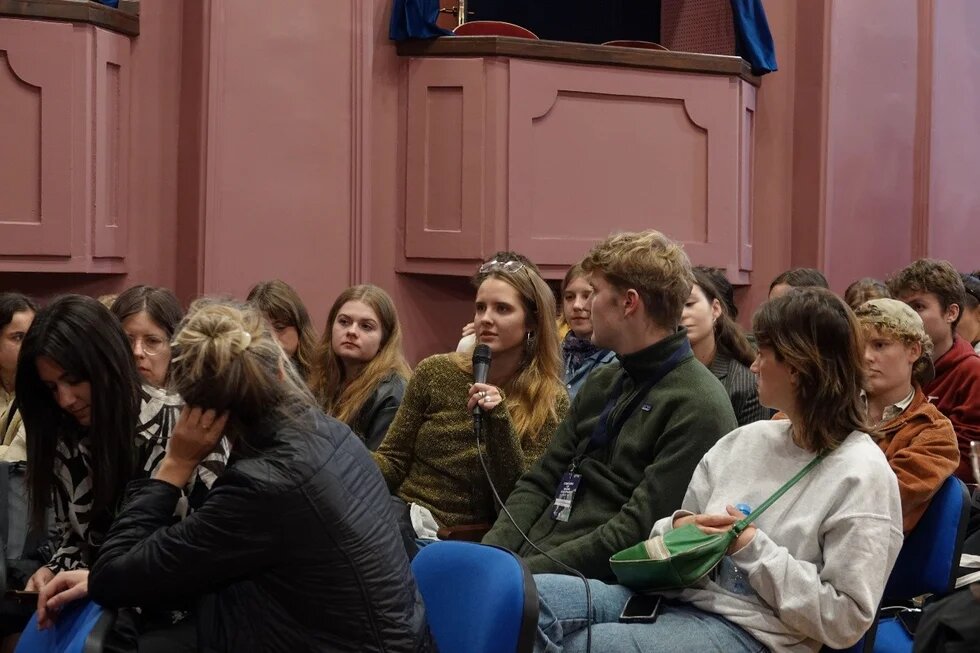
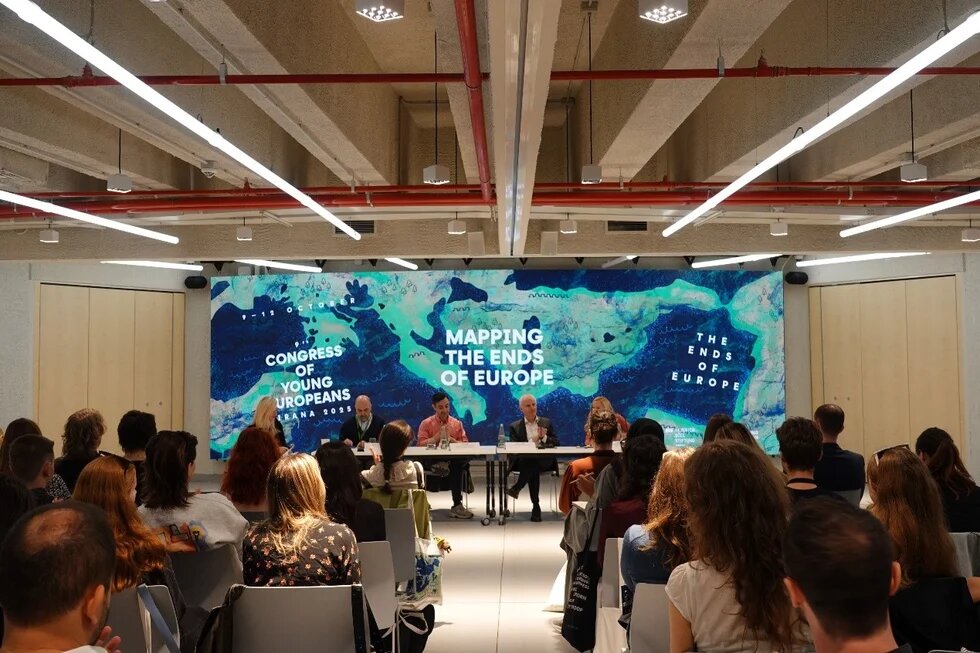
On the second day of the Congress we discussed Europe’s shifting purpose, contested borders, and foundational values with the help of Green Youth members, Green politicians and analysts such as Gökhan Tuncer, the director of Heinrich Böll Foundation – Tirana office, who expressed his staunch belief in the European Union and the prospect of bringing people together as a united political project, and Luca Guidi, who pointed out that Europe faces huge challenges and in order to answer these problems a concrete and radical programme is needed. One issue that was less vocally addressed was European rearmament, which should not have been the case, as it is an urgent matter of our time and we need to provide answers to this as well.
The second panel session was themed “Nature at the Edge: Biodiversity, Borders and the Future of Life”. Biodiversity loss, habitat fragmentation, and the climate crisis are reshaping the continent’s landscapes, from its bustling cities to its vulnerable border regions. In this panel we debated the political ambitions and realities behind Europe’s biodiversity policies, the opportunities and limitations of the EU Nature Restoration Law, the critical importance of the Balkans for Europe’s ecological future and ground-level experiences from Albania’s frontline conservation efforts. What struck me most was first Vedran Horvat, director of the Institute for Political Ecology, who explained the importance of political ecology as a factor in social conflicts related to climate change, uneven distribution of opportunities related to ecological transition between the north and the south, the ongoing environmental degradation in the region and the pivotal support of social movements in advancing the ecological cause; second, Diana Malaj, an activist from ATA group, who described the recent protests in north Albania and tactics of communities and activists ranging from tent occupations to block construction works to legal actions and court cases backed by scientific research and documentation.
Fleeing from Albania
There were six walking tours in Tirana about struggles, housing, inequality and transformation. These walking tours explore the layered realities of Tirana’s urban transformation, where rapid development, shrinking public spaces, and ecological disruption intersect. The tours offered a critical look at how visions of progress reshape the city, often at the expense of access, memory, and nature.
The tour that I participated in was themed “Migration and Exodus” and was guided by Dr. Ervin Kaciu and it was a memorable and educative experience. Migration has been one of the most defining phenomena in Albania. From the symbolic act of entering foreign embassies at the fall of communism, to successive waves of departure driven by poverty, misgovernance, and the pursuit of dignity, Albanian migration reveals the interplay of freedom, necessity, and global inequality. During the tour we explored why people leave, where they go, what they leave behind and which forms nostalgia for their home country takes. After that we visited the museum of the secret services under Enver Hoxha, and read about the history of the communist regime, the violence of the secret police, the mass indoctrination and surveillance of citizens and the cultural and artistic suppression to fit the regime’s propaganda.
Outsourcing migration
On the third day of the Congress participants could choose between two panel sessions. Either the “Gender in the Margins” session, which explored how gendered power relations are shaped and intensified in peripheral contexts in the Balkans, or the “Outsourcing Migration at the Ends of Europe” session.
I chose to attend the “Outsourcing Migration at the Ends of Europe” session to discover the ethical and theoretical implications of border regimes, using the 2023 Rama-Meloni agreement as a case study. This deal, which relocates the responsibility of processing asylum seekers intercepted by Italy to detention centers on Albanian territory, exemplified a growing tendency within European migration governance: the displacement of legal and moral obligations beyond EU borders. Giorgia Jana Pintus, from the organization Associazione Ricreativa Culturale Italiana, explained the term externalization, meaning the delegation of certain asylum management responsibilities to third countries through bilateral or multilateral agreements with the aim of preventing migrants from reaching EU borders. Kristina Millona, researcher, Europe Other, presented photos from satellite images of the migration camps which resembled prison camps, realizing the harsh conditions migrants will face with the enactment of a “common system for the return of third country nationals” by the European Commission beginning with increasing the return rate on the basis of “safe countries” and reducing the procedural guarantees by law for the asylum applications.
After the panel sessions were over, we engaged in workshops on the urban environment, gender, nature protection, energy communities, activism and policy making.
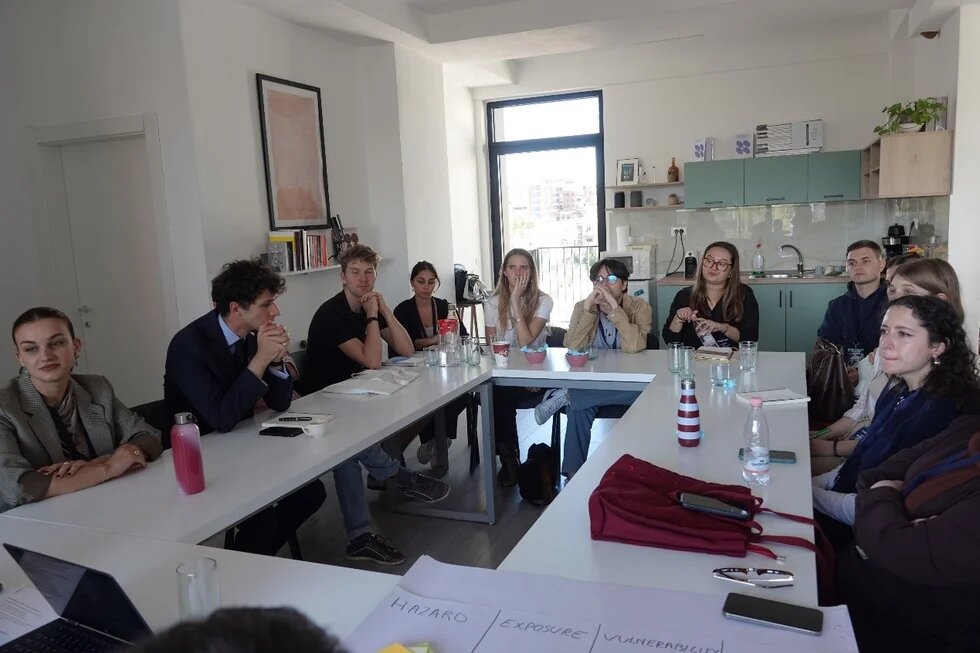
The “Youth, Peace & Security in a Warming Europe” in which I participated was an informative first-hand experience examining how droughts, wildfires, floods, and heatwaves exacerbate social tensions and security risks, and where youth leadership can foster prevention and resilience. Within the framework of the Youth, Peace and Security (YPS) Agenda, we were divided into three teams of five people and analyzed concrete cases of climate-related insecurity, identified conflict pathways, explored possibilities for youth-led mediation and advocacy and drafted recommendations (hazards, exposure, vulnerability, outcome). Through these collaborative exercises, we imagined ourselves as mediators, peacebuilders, and advocates for climate security at both local and international levels.
An open, democratic and participatory dialogue
On the final day of the Congress, we joined together to evaluate the results of the workshops, reach conclusions and propose ways for the Congress and its members to further improve its content, activities and workshops.
Recalling memories from my experience as a participant in the Congress of Young Europeans, the impact it had on my political thinking was immense, as it cultivated the seeds of political ecology as an everyday practice and the urgency to tackle the climate catastrophe that is ahead of us. I interacted with many experts in the field of green politics and I exchanged views and thoughts with young people from different social backgrounds but equally keen to promote and advocate for climate justice and social equality and that made me broaden my horizons even more. The workshops gave me a full understanding of the social and historical conditions of Albania and also trained me for potential decision-making processes in my future career as a journalist. Last but not least, I felt that a thorough discussion about European rearmament – a crucial issue of our age – was missing and directly connected to global conflicts and that needs to be challenged on the ground through the lens of a careful and ideologically coherent policy practice that advocates for welfare, not warfare of the citizens of Europe.
Living in turbulent times requires facing questions about the existential ends of Europe. From climate collapse and the disregard of human rights to accessible housing, energy and peace, this European Congress set the right questions and searched for concrete answers through open, democratic and participatory dialogue, seeking collective solutions because the problems are common and the solutions will come from collective action. The future may look challenging but the European Youth is a key actor capable of altering the course of history and the Congress has a role to play in it.
*The congress is part of a long-standing biannual initiative organized by the Heinrich Böll Foundation, in collaboration with the Federation of Young European Greens and the Green European Foundation, with the financial support of the European Parliament to the Green European Foundation. The European Parliament is not responsible for the content of this event.