

ARTICLE
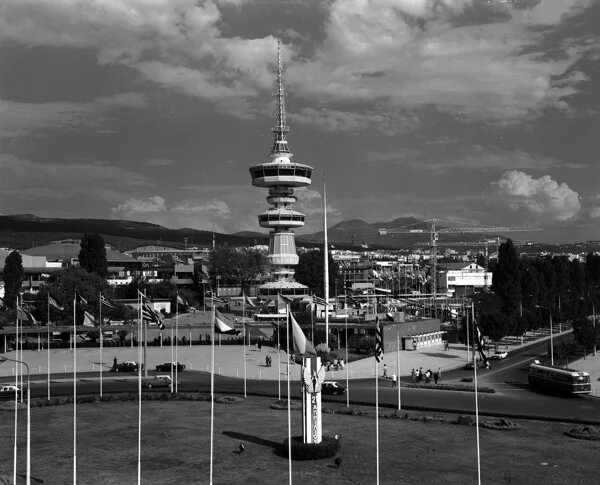
Just hours before his death, in April 1935, the visionary behind the Thessaloniki International Fair (TIF), Nikolaos Germanos, received the good news that a plot of land had been definitively granted for its organisation. The Fair has remained on this site for 90 years. For more than two decades, an ongoing debate has unfolded regarding the future of the TIF exhibition centre: initially, whether it should be relocated to a new site in order to expand and attract large-scale international exhibitions, and subsequently whether redeveloping the existing exhibition grounds would be the more viable option. In recent years, civil society has succeeded in bringing an additional dimension into this debate –that of urban green space– advocating for the transformation of the TIF site into a metropolitan park. This is, after all, the last large tract of land owned by the Greek state in the heart of Thessaloniki, a city where the ratio of green space is three times lower than the minimum acceptable threshold set by the World Health Organization.

I have been following this issue almost from the very beginning, and I find myself thinking that the line which best captures where we stand today is: “nothing has changed, and yet nothing is as it used to be.” Over all these years, there have been discussions, plans on paper, and consultations, but the exhibition centre is still there, left to the wear and tear of time. To date, neither relocation to a new site nor redevelopment in its current location has moved forward. The relocation plan to Sindos collapsed under the weight of the economic crisis, while the redevelopment plan effectively collapsed on its own, as its budget increased sixfold from 2012 to today. For five years, efforts were made to identify an appropriate funding mix, but the numbers did not add up, and in hindsight the solution presented as the “only viable” one proved to be anything but viable.
Today, at least 18,000 residents have signed a petition calling for a referendum to express their views, demanding that the site be transformed into a metropolitan park. This mass demand for public participation and co-decision-making is unprecedented, not only for Thessaloniki but also for the country as a whole.
Although recent months have been dense with developments that have overturned previous assumptions, a brief retrospective is necessary, as it helps place the case of the TIF within a broader perspective.
The Sindos decade
In 1998, Thessaloniki set itself the collective goal of bidding to host Expo 2008. Ten potential sites were evaluated, and the preferred option was the relocation of the exhibition centre to the farm of the then Technological Educational Institute (now International Hellenic University) in Sindos. Although the city ultimately did not host the event, in 2008 the then Prime Minister Kostas Karamanlis announced the relocation of the Thessaloniki International Fair and the conversion of its existing site into a metropolitan park. The Central Macedonia branch of the Technical Chamber of Greece (TEE) expressed confidence that the relocation would be highly beneficial both for the national exhibition organisation and for the city.
I remember marathon meetings at the Ministry of Macedonia–Thrace, where mayors from across the Thessaloniki regional unit promoted the advantages of their respective areas, seeking to build alliances in order to secure the relocation of the TIF to their municipality. The working group of the TEE/BCM (the only body to have systematically examined the issue to date) reassessed all proposals and concluded that relocation to Sindos was the optimal solution. Following this, in early 2009, all relevant stakeholders reached a unanimous recommendation: the TIF would move westwards, and in its place, in the city centre, a large metropolitan park would be created.
All of this remained at the level of declared intentions. No funding had been secured, there was no roadmap outlining the next steps, and the Sindos site was not even formally owned by the TIF. Shortly thereafter, elections were held in 2009, and in 2010 the economic crisis erupted. The last time the relocation of the exhibition centre to the western part of the city was formally raised as a demand was in 2013, in a memorandum submitted by the Central Macedonia Regional Union of Municipalities to the then Prime Minister. By that point, no one was speaking any longer about the need to relocate the TIF.
The redevelopment plan
In 2013, the management of TIF–Helexpo presented a preliminary feasibility study (consultants: Advice – BCS – Kantor), examining the financial viability of two scenarios: relocation to Sindos and redevelopment on the existing site. The study concluded that relocation to Sindos (based on the scale envisaged for Expo 2008) would cost €280 million, whereas the option of redeveloping the current site was estimated at €124 million. In this context, any discussion of relocation under conditions of economic crisis appeared detached from reality. The initial redevelopment plan for the existing site provided for the construction of five exhibition pavilions, the retention of the “I. Vellidis” conference centre, and the creation of a metropolitan park covering 8.65 hectares. In order to attract private capital to co-finance the project, the plan was expanded to include parking facilities, commercial buildings totalling 12,000 square meters, a five-star hotel with 120 beds, and an additional 6,000 square meters of built space.
Over the years, a broad consensus among institutional stakeholders formed around the redevelopment plan proposed by Thessaloniki International Fair Helexpo, which was supported by successive governments. The same actors who, prior to the crisis, had endorsed the relocation of the exhibition centre to Sindos shifted their position and came to support redevelopment instead.
What remained unchanged, however, was the spatial planning framework: the Regulatory Plan of the 1980s, still in force, envisaged a metropolitan park of green space and culture on the existing site, a provision that was incorporated into the revised Regulatory Plan of 2014 (which, however, was never ratified).
Because the revision of the General Urban Plan had not been formally approved, and because neither the building regime nor property ownership (parts of the site belonged to the municipality of Thessaloniki), nor the street layout and building terms and restrictions were clearly defined, it was decided to prepare a Special Spatial Plan. This was completed in 2019 and ratified in 2021 by Presidential Decree. Under this Special Spatial Plan, the maximum permitted built area reached 92,000 square meters, with a maximum site coverage of 50%, while the entire 17.6 hectares site was designated for “Central Urban Functions.” On the basis of this plan, an international architectural competition was held in 2021, attracting 116 proposals from around the world. The first prize was presented in July 2021. The winning proposal envisaged the demolition of all exhibition pavilions and the “I. Vellidis” conference centre, to be replaced by five large building complexes –three exhibition halls connected by an elevated bridge, a conference centre, a multi-storey hotel, and a business centre– as well as parking for 1,660 cars. Fifty percent of the site would be allocated to green space.
For many years, the redevelopment plan for the TIF was not contested by any institutional actor. Local authorities, chambers, and successive governments all declared their support, as the redevelopment of the exhibition centre was seen as essential for its revitalisation and growth, and as a more economically realistic option compared to relocation to Sindos.
The contestation
The first arguments challenging the project were articulated in 2019, when the Strategic Environmental Impact Assessment of the redevelopment’s Special Spatial Plan was put out for public consultation.
- In 2020, a text signed by 42 persons active in the city’s civic sphere was published, arguing that the redevelopment would be detrimental to the urban environment, characterising the Public–Private Partnership (PPP) scheme as a financial misstep, and advocating instead for the creation of a metropolitan park on the current site and the relocation of the TIF site to western Thessaloniki. This group formed the core of the Citizens’ Initiative “TIF – Metropolitan Park for a Sustainable Thessaloniki,” which mobilised engaged citizens and produced extensive scientific documentation to support its arguments, repeatedly presenting them to the public.
- In early 2021, seven mayors from western Thessaloniki called for a return to the original state plan: the construction of a new exhibition centre in the Sindos area and the creation of a metropolitan park in the city centre. Shortly afterwards, within the same year, the redevelopment’s Special Spatial Plan was ratified by Presidential Decree.
- Also in 2021, members of the Citizens’ Initiative filed an appeal before the Council of State Greece seeking the annulment of the plan. Their main arguments were that: (a) the objectives of the existing spatial planning framework, which had precedence over the Special Spatial Plan, were undermined; (b) the environmental character of the intervention area was altered and degraded, in violation of Article 24 §1 and §2 of the Constitution, and the balance of public and open spaces was reduced and downgraded; and (c) no traffic study had been conducted and the environmental impacts of increased traffic in the wider area, both during construction and due to the operation of a 2,000-space parking facility, had not been properly assessed. The case was heard four years later, in February 2025, and the court’s decision is still pending publication.
Civil society
For most citizens, it was not easy to follow the evolution of this debate, which began in the mid-2000s, as the process was protracted and the parameters kept changing. In 2018, when the redevelopment plan was put to public consultation, no effort was made to elicit citizens’ views through open discussions, no public opinion surveys were conducted, and the very notion of participatory planning was clearly absent from the debate over the redevelopment of a site in the heart of the city. The architectural proposal that won first prize in the international competition was presented in mid-2021, during the pandemic—at a time when the redevelopment of the Thessaloniki International Fair was not a public concern. For the majority of citizens, the scale of the planned intervention in public space became apparent only in the past year: the largest pavilions are comparable in size to the Roman Forum of Thessaloniki, while even the smallest exceeds Aristotelous Square.
At the same time, during and immediately after the pandemic, citizens became increasingly sensitised to issues of urban green space and began organising in related groups such as “SOSte ta dentra” (means: “Save the trees”). In late 2024, citizens and collectives formed the Coalition “All of TIF as a Park,” calling for the creation of a large metropolitan park and the relocation of all exhibition activities to a new exhibition centre in Sindos.
In early 2025, the municipal groups “Thessaloniki for All” and “City Reversed” called on the Thessaloniki City Council to hold a referendum on the future of the TIF. When their motion was not approved, they decided to invoke the legal provision allowing for a referendum upon request by 10% of registered voters. Together with the Coalition, they established the Referendum Organising Committee. The Committee’s proposal is to retain only the architecturally significant buildings (Pavilions 1, 2, 6, 7 and 8), which would host low-impact exhibitions, while larger or more disruptive events would be relocated to a new exhibition centre to be built in Sindos, on land owned by the International Hellenic University.
The question put to citizens is the following: “Do you agree that the TIF exhibition centre should be transformed, exclusively through public funding, into a Metropolitan Park of high-quality green space, culture and recreation, without new construction, while (a) only the pavilions of proven institutional historical value are preserved and restored to host low-impact exhibition and cultural activities, and (b) large-scale exhibitions are relocated to new facilities on public land in Sindos?”.
Through an extensive communication campaign, the organisation of public information events, and the mobilisation of numerous volunteers, the Committee has so far collected 18,000 signatures. If the number reaches 23,000 –corresponding to 10% of registered voters– the President of the City Council is required, within one month, to bring the matter forward for discussion. Provided the legal conditions are met, the calling of a referendum requires a simple majority in the City Council. Therefore, the holding of a referendum is by no means guaranteed.
In any case, civil society, initially through the “Citizens’ Initiative”, and subsequently through the “Coalition” and the Referendum Organising Committee, has played a decisive role in shifting the overall climate. The question of the future of the TIF has now entered public opinion polls, and citizens have begun to express their views (for examples, see here and here). Both the number of signatures and the polling results can no longer be ignored...
A key role in this process was played by the debate organised on 18 May 2025 by the Heinrich Böll Foundation and the local popular magazine “Parallaxi”, with the participation of TIF-Helexpo president Tasos Tzikas and Ifigeneia Kamtsidou, professor at Aristotle University of Thessaloniki and member of the Citizens’ Initiative. The event, attended by hundreds in person and thousands online, clearly laid out the stakes and the arguments of both sides. One month later, the Prime Minister stated that the plan would be revised, adding that “we will not proceed with anything without reaching an understanding with the local community. We are not here to impose a solution that would come into conflict with the local community.”
The green is “fading” out
A significant part of the debate over the future of the exhibition centre has focused on the need to create a high-quality metropolitan park on the Thessaloniki International Fair site. The TIF–Helexpo side argues that large-scale buildings can coexist with a metropolitan park. Opposing citizens maintain that this is not feasible. Below, we examine how much green space currently exists at the site, what the redevelopment proposal envisaged, and what different actors have put forward:
- Today, across the 17.6-hectare site occupied by the TIF, there are 180 trees.
- The Presidential Decree for the Special Spatial Plan, which forms the basis of the redevelopment, states that in Sector V, 6 hectares are designated as a “metropolitan park,” but that its uninterrupted public use could potentially be restricted.
- The plan put to consultation in 2018 envisaged that green space would cover 50% of the 17.6-hectare site.
- In the preliminary study of the architectural proposal that won first prize, the number of trees was projected at 800.
- The Citizens’ Initiative argued that this would not constitute a cohesive, dense metropolitan park, but rather fragmented green zones between roads, pavements, and planting beds. It also pointed out that the space is not formally designated as public, and could be occupied by exhibitors whenever this serves the needs of the TIF.
- . In September 2023, the municipal group “Team for Thessaloniki” (which subsequently won the local elections) expressed support for the creation of a metropolitan park, alongside the retention of low-impact exhibition activities and the development of a modern exhibition centre in the peri-urban zone of the city, capable of hosting large-scale events.
- In 2024, the new municipal administration of Thessaloniki set a number of requirements for supporting the existing redevelopment plan. These included: reducing the building coverage by 0.4–0.6 hectares, creating a metropolitan park of 9–10 hectares in the southern part of the TIF site with dense planting of at least 4,000 trees and a strong water element, and establishing a new park of 1.2–1.4 hectares in the northern section (at the Agia Fotini site, land formerly owned by the Ministry of National Defence and transferred to the municipality).
- These conditions were accepted by TIF-Helexpo, which requested a revision of the architectural proposal. In the updated version, the number of trees was set at 3,000–4,000 (i.e. 25–35 trees per hectare).
- According to the Citizens’ Initiative, 4,000 trees could only fit if the open space resembled a plantation, with virtually no gaps between trees. By contrast, the redevelopment plan currently under discussion includes just 1,511 trees.
The cost of the redevelopment
Four years have passed since the architectural proposal that won first prize in the international design competition was presented, and the redevelopment plan has yet to move forward, as no viable financing scheme has been secured.
The preliminary financial study of 2013 estimated the cost of the project at €60–120 million. The cost of the park was expected to be covered through public expenditure, while the remaining amount would be financed through a Public–Private Partnership (PPP). The private partner would provide the capital that the state could not allocate during the crisis, in exchange for managing the hotel, parking facilities, and business centre.
Over time, the estimated cost rose to €160 million, then to €220 million following the completion of the Special Spatial Plan, to €280 million during the pandemic, and later to €300 million after the outbreak of the Russia–Ukraine War, ultimately reaching €370 millionin 2025. It is worth recalling that the relocation option to Sindos had been rejected in 2013 on the grounds that it would cost €280 million (and up to €500 million including accompanying infrastructure works). To date, no financial study has been presented that adequately justifies the tripling of the initially estimated redevelopment cost. The management of TIF–Helexpo attributes the increase to rising construction material costs (between 2021 and January 2025, the construction materials price index increased by approximately 25%, according to Hellenic Statistical Authority[1]) and to the complexity and high cost of the structures proposed in the winning design.
A Public–Private Partnership that is not viable
Throughout this period, TIF–Helexpo SA proposed a financing scheme based on a Public–Private Partnership (PPP), in which the company itself might also participate if necessary. As the project’s budget increased, the potential loan required from the company was estimated at €50–75 million, around twenty times higher than the highest EBITDA it has recorded over the past five decades (€3.5 million in 2024), while several previous years had been only marginally profitable or even loss-making. Beyond the question of whether such borrowing would have been feasible or sustainable for TIF–Helexpo, if this scenario were implemented it would effectively mean that two-thirds of the funding would come, directly or indirectly, from the broader public sector, while the private partner would finance only the infrastructure it would exploit (hotel and conference centre). This, however, would not constitute a genuine PPP, but rather the free concession of a highly valuable plot of land to a private actor for commercial development, while the exhibition centre itself could have been constructed with public funding.
For those of us who have followed this issue for years, it was clear that TIF–Helexpo’s proposal did not have the backing of its main shareholder, , the Hellenic Corporation of Assets and Participations, which explains why it did not move forward. Last March, a representative of the fund revealed that the total cost of the project is estimated at €370 million, with public funding of up to €120 million, plus an additional €28 million from the Region of Central Macedonia for the development of the unified park, with no reference to borrowing. The remaining €220 million would have to be covered by private capital. However, as became evident, the private sector was not willing to invest such a large sum in exchange for the exploitation of just 25,000 square meters of built space (hotel and business centre). In an attempt to keep the budget closer to €300 million, scenarios were considered involving a reduction of approximately 4,000 square meters in the conference centre and 2,000 square meters in the business centre, or even a horizontal scaling back of one or more buildings.
The current situation
Following the impasse over funding, and amid growing pressure from civil society, all stakeholders involved in the project now appear willing to consider changes to the redevelopment plan:
- The Prime Minister Kyriakos Mitsotakis stated that all options will be examined and that a solution will be presented by September, one that “will most likely differ from the plan that has so far been made public.” He highlighted the parameters of cost (“plans are all well and good, but we must ensure that sufficient funding resources are secured and that the solution we pursue will be viable in the long term”), society (“we are not here to impose a solution that will come into conflict with the local community”), the city’s need for a larger green lung in its centre, and the historical significance of the TIF («which is closely linked to Thessaloniki itself»).
- The Hellenic Corporation of Assets and Participations (the main shareholder of TIF–Helexpo) is assessing all scenarios, including one that prioritises a much smaller and more functional exhibition centre, based on which exhibitions are profitable and what spatial needs they entail.
- The Mayor of Thessaloniki, Stelios Angeloudis, has put forward a proposal that includes the removal of the hotel and commercial centre (i.e. the real estate component of the plan), the construction of an underground parking facility funded publicly, and only two buildings (one for exhibitions and one for conferences), alongside a metropolitan park covering the rest of the site. However, he opposes the relocation of exhibition activities to Sindos.
- Most exhibitions cover an area of 12,000–20,000 square meters, but events such as Agrotica and Zootechnia require around 40,000 square meters. The key question is whether a single exhibition hall would be sufficient to meet TIF’s needs.
- The President of TIF–Helexpo, Tasos Tzikas, clarified that the business centre and hotel “will not be part of the new redevelopment equation,” and that the core of the plan remains intact, possibly without private sector participation in its financing.
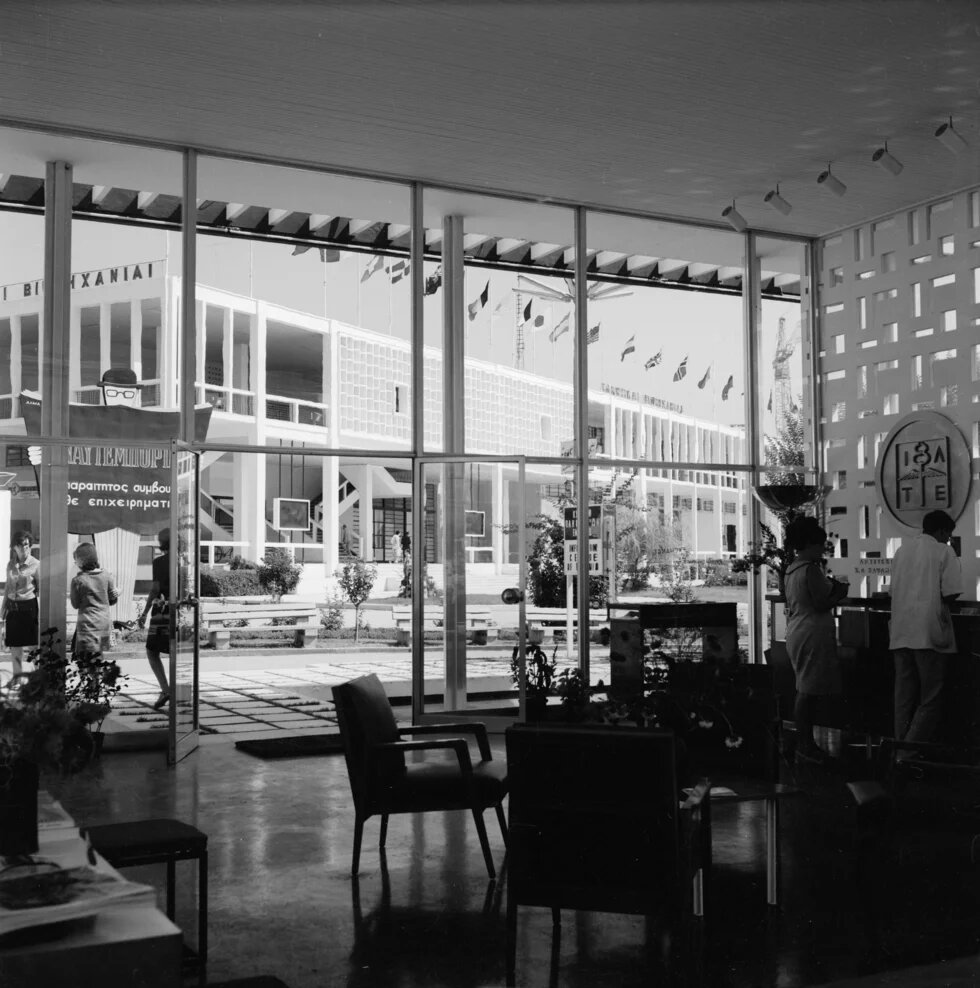
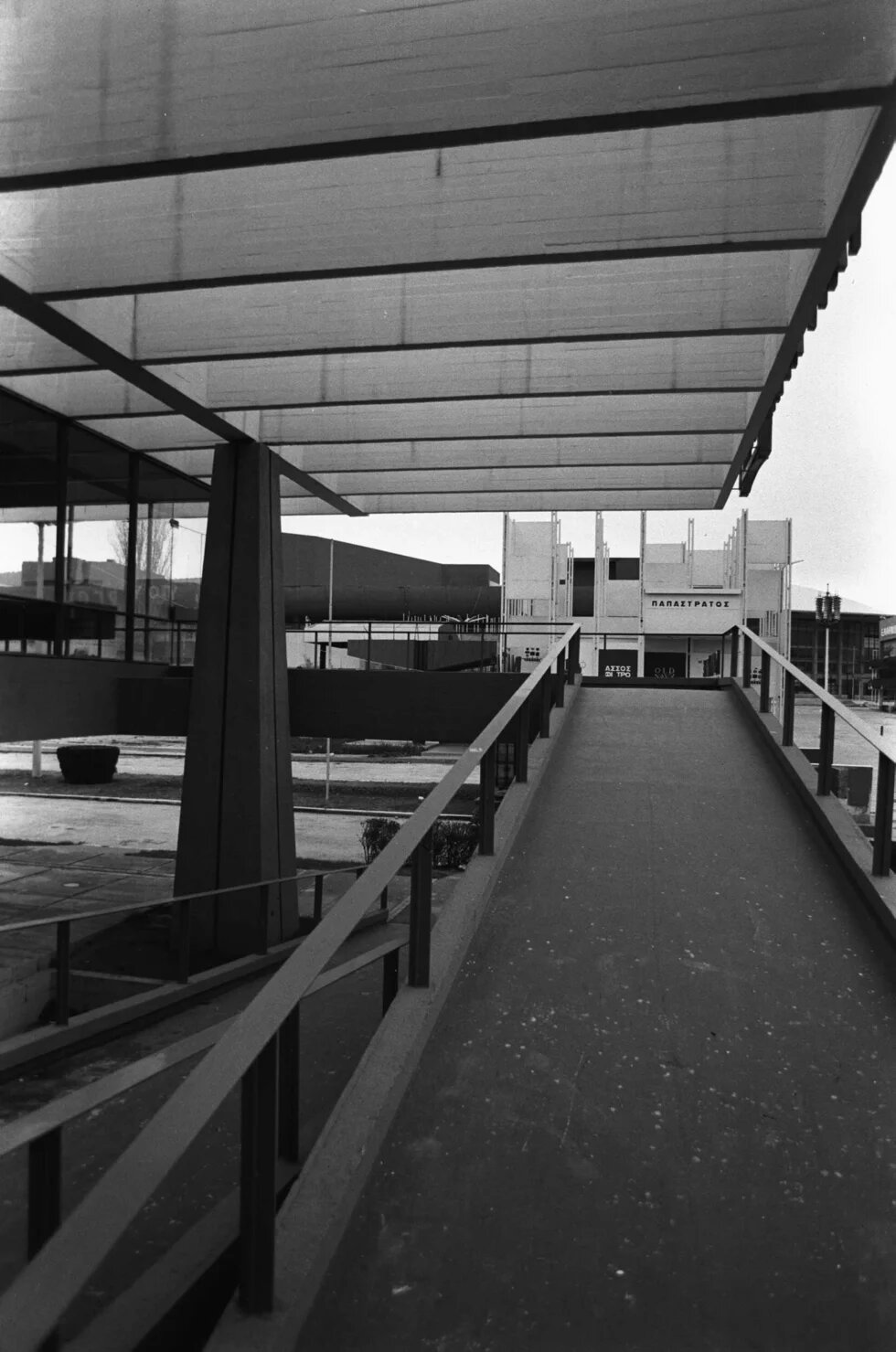
- The Citizens’ Initiative and the Referendum Organising Committee oppose the construction of new buildings (noting, among other things, the risk of significant delays due to archaeological excavations) and support the preservation and adaptive reuse of architecturally significant modernist buildings, which could host smaller exhibitions. This approach would require far less capital and leave more space for a metropolitan park. For larger exhibitions (Agrotica, Zootechnia), they propose the construction of a new exhibition centre in Sindos. They also oppose the creation of a large underground parking facility, arguing it would act as a generator of traffic congestion.
- Organisations such as the Central Macedonia branch of the Geotechnical Chamber of Greece and the Association of Architects of Thessaloniki, along with more than 40 collectives, support the proposal for a metropolitan park and the preservation of architecturally valuable buildings.
- Other institutions, such as the Central Macedonia branch of the Technical Chamber of Greece, Chamber of Small and Medium Industries of Thessaloniki, Chamber of Tradesmen of Thessaloniki, and Thessaloniki Chamber of Commerce and Industry, which had supported the redevelopment plan, are currently adopting a wait-and-see stance pending the government’s final decisions.
- Among opposition parties, PASOK–KINAL supports the creation of a metropolitan park hosting low-impact exhibition activities and opposes the real estate logic, while SYRIZA (under whose government the redevelopment plan was promoted) supports redevelopment at the current site with more green space and no private sector involvement.
Sindos and Thermi
A final, but by no means least, parameter in this debate concerns Sindos, where in 2008 it was decided that the TIF would be relocated. Mayors and institutions from western Thessaloniki continue, to this day, to advocate for the full transfer of the exhibition to Sindos, on land belonging to the farm of the International Hellenic University, which the university is willing to make available. The Citizens’ Initiative and the Referendum Organising Committee support a dual solution: “heavy” exhibitions would be hosted in a new exhibition centre in Sindos, while lighter exhibition activities would remain in the existing buildings.
The management of TIF–Helexpo considers the relocation scenario to Sindos disastrous, while the Municipality of Thessaloniki is unwilling to “lose” the TIF from the city centre. Critics of this option point out that the Sindos scenario has not been properly studied, that the entire process of studies and approvals would have to start from scratch, and that the necessary funding would still need to be secured for the construction of a new exhibition centre, whether small or large.
The Municipality of Thermi has also entered the discussion. Should the dual exhibition-centre solution be adopted, with out-of-town facilities for “heavy” exhibitions such as Agrotica and Zootechnia, it has expressed its willingness to provide the required land.
Conclusion
At the time of writing, plans for the future of the Exhibition are being drafted and revised in Athens. According to information leaked to the press, the plan reportedly favoured by Kyriakos Mitsotakis envisages that the Exhibition will remain in the city centre, with one exhibition and one conference facility; that the construction of a hotel and a commercial–business centre will be cancelled; and that the metropolitan park will cover 150 hectares.
[1] If the base year (2021) index was set at 100, the 12-month average index for 2025 stood at 126.6.