A tragedy that caused thousands of deaths, immeasurable losses, and countless personal dramas—and one that reshaped Greece on every level—the Asia Minor Catastrophe remains one of the deepest wounds in modern Greek history, with repercussions still visible today. Among the surprisingly few public commemorations held in Thessaloniki for the centenary, the most significant was undoubtedly the two-part program by Parallaxi: the multimedia performance “The city that welcomed”, a live reenactment of the refugees’ arrival in Thessaloniki, and the exhibition “From Asia Minor to Thessaloniki”, which explored the refugees’ origins and the ways they settled in the city. It is perhaps no coincidence that these anniversary events focused on refugees, as similar stories of displacement continue to unfold in the region today. Both events took place in autumn 2022 as part of the urban project “Thessaloniki Otherwise” and were supported—among others—by the Heinrich Böll Foundation.

“The city that welcomed”
Kellarios Bay, 18 September 2022
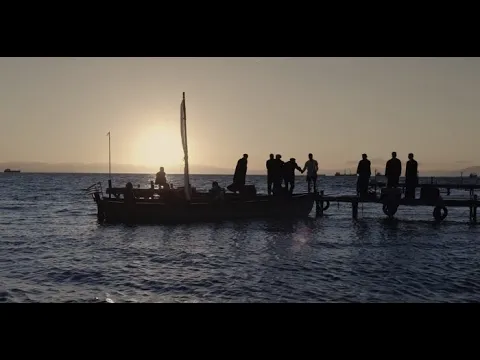
A theatrical performance combining music, song, and projections brought to life the moment when Asia Minor refugees arrived in the place that would become their new home. Staged at Kellarios Bay, behind the Poseidonio sports complex—an area that still retains elements of its original character, with wooden piers and a sandy shoreline—the interactive multimedia event unfolded through stories told from both land and sea. Based on real testimonies, these narratives described the abandonment of the regions inhabited by Greeks of Pontus and Asia Minor, the arduous journey to Greece, their arrival in Thessaloniki, the city’s reception, their gradual integration, the emergence of refugee neighborhoods, the faces and voices of the newcomers, the music they carried with them, and the music that was born here. In this way, the entire arc of events surrounding the Asia Minor Catastrophe was vividly reimagined.
This large-scale celebration of the city’s memory was conceived by Giorgos Toulas, based on a specially commissioned text by Thomas Korovinis, and directed by Haris Pechlivanidis. It featured musicians (Dimitris Vasileiadis, Kostas Papagiannidis, Akis Papaemmanouil), singers (Voula Savvidi, Andreas Karakotas, Thomas Korovinis), and actors (Eleni Thymiopoulou, Mara Tsikara, Stelios Tzaferis, Giorgos Sfyridis, Dimitris Siakaras, Efi Drosou, Chrysa Zafeiriadou).
Alongside the Municipality of Thessaloniki, numerous institutions collaborated on the event, including the National Theatre of Northern Greece, the Thessaloniki International Fair, and the Cultural Center of the Region of Central Macedonia. Additional contributions came from the Historical Archive of Refugee Hellenism of Kalamaria, the Hellenic Literary and Historical Archive, the Thessaloniki History Center, the Association of Katirliotes of Kalamaria “St. John the Forerunner”, the Thessaloniki Museum of Photography, and the Thessaloniki Regional Scout Administration.

Φωτογραφίες: Θωμάς Νεδέλκος, Δήμητρα Κυπριώτη / Photos: Thomas Nedelkos, Dimitra Kyprioti
Image credits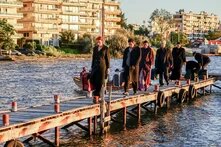
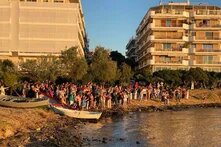
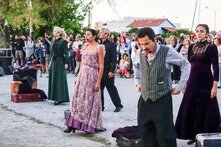

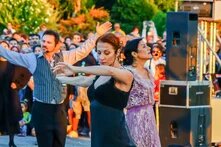
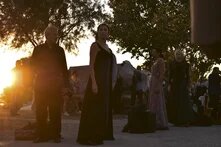
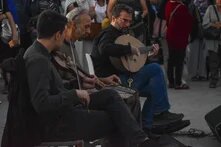
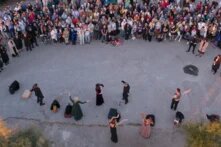
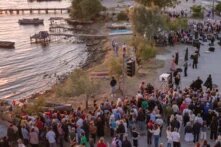
Watch a video from Parallaxi’s event at Kellarios Bay, “The city that welcomed”, held as part of “Thessaloniki Otherwise” to mark 100 years since the Asia Minor Catastrophe and the arrival of the refugees (18/9/2022).
“From Asia Minor to Thessaloniki”
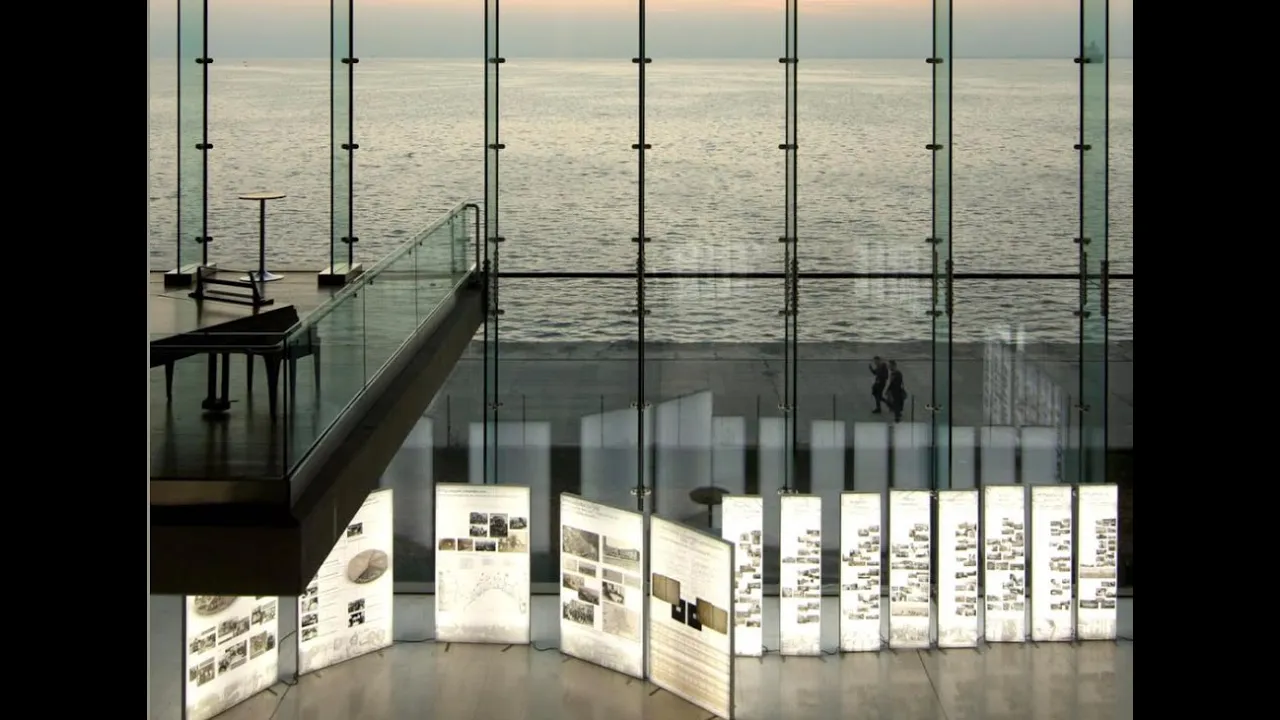
Thessaloniki Concert Hall (M2 Foyer)
5 October 2022 – 15 November 2022
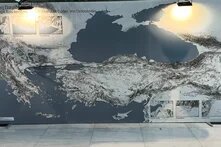
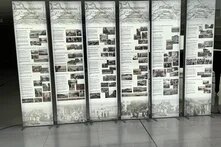
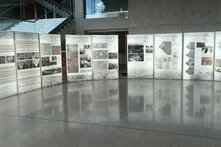
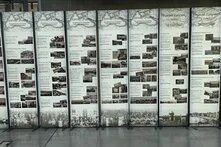
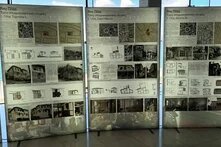
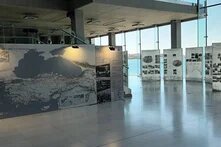
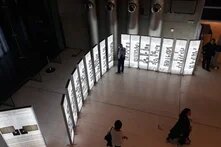
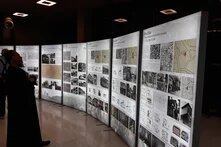
Maps, photographs, documents, and other archival materials formed the rich exhibition “From Asia Minor to Thessaloniki: The Rebirth of a City”, which focused on the refugees’ places of origin and their settlement in Thessaloniki. The exhibition was co-organized by Parallaxi, the Thessaloniki Concert Hall Organization, the Municipality of Thessaloniki, the Thessaloniki History Center, and the School of Architecture of the Aristotle University of Thessaloniki, whose team curated the project (Athina Vitopoulou, Maria Dousi, Sofoklis Kotsopoulos, Michalis Nomikos, and Erifyli Chontolidou).
Thessaloniki—already devastated by the 1917 fire—received a massive number of refugees from Asia Minor after 1922 and the compulsory population exchange. After their initial temporary settlement, the refugees’ rehabilitation continued until the Second World War and beyond. Gradually, they became part of the city’s social and economic fabric and, in essence, contributed to its rebirth and to the shaping of the modern metropolis.
The exhibition approached this historical process through three thematic sections:
Places of origin. The history and culture of the lost homelands
The exhibition presented the regions of Asia Minor from which the refugee families who settled in Thessaloniki originated, bringing with them the cultural elements of their lost homelands. Research identified more than 500 such places—from Thrace, Pontus, and western, southern, and central Asia Minor—highlighted through historiographical and photographic material.
Temporary settlement. The timeline of arrival in a devastated city
Arriving in a city destroyed by the 1917 fire, refugees were initially housed in makeshift camps and any available buildings. The exhibition presented the social characteristics recorded upon their arrival, mapped the structures of their first settlements, and depicted their living conditions.
Permanent settlement. The rebirth of the city
Through state intervention, refugees were housed either in buildings abandoned by the Ottomans—mainly in the Upper Town—or, more commonly, in new residential formations created on the outskirts of the city’s then boundaries. This housing program amounted to a vast urban expansion that significantly altered existing plans and decisively shaped the structure and form of the interwar city, which was spatially and socially reborn through the refugees’ arrival and gradual integration.
Scientifically rigorous and aesthetically original—rich in information yet deeply moving—the exhibition demonstrated how difficult‑to‑access archival material can be transformed into an accessible public resource, but despite its strengths it remained open only briefly, from 5 October to 15 November 2022. Unfortunately, it could not acquire a more permanent form—a reminder of how superficially Thessaloniki often treats issues of historical memory. As Parallaxi noted shortly after its conclusion: “An exhibition that could have remained permanently in a public building and served as a study resource for every generation was, despite our efforts, dismantled and packed away. None of the city’s institutions—first and foremost the Municipality of Thessaloniki, to which it directly pertains—showed interest in its future, despite the hundreds of enthusiastic comments.”
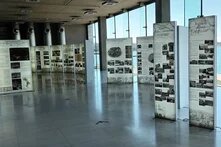
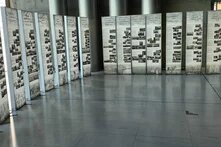
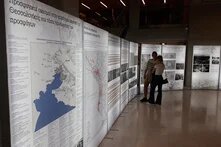
Watch a short video with highlights from the exhibition “From Asia Minor to Thessaloniki”.